

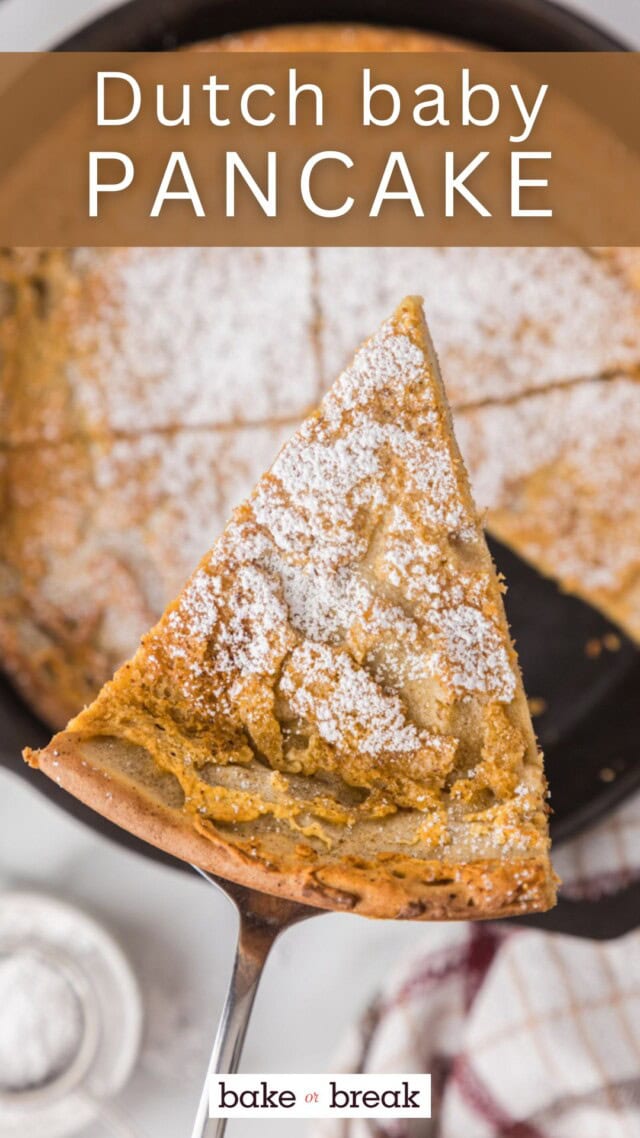
A Dutch baby pancake delivers big, bakery-worthy drama with almost no effort. Just blend, pour, bake, and watch the magic happen.
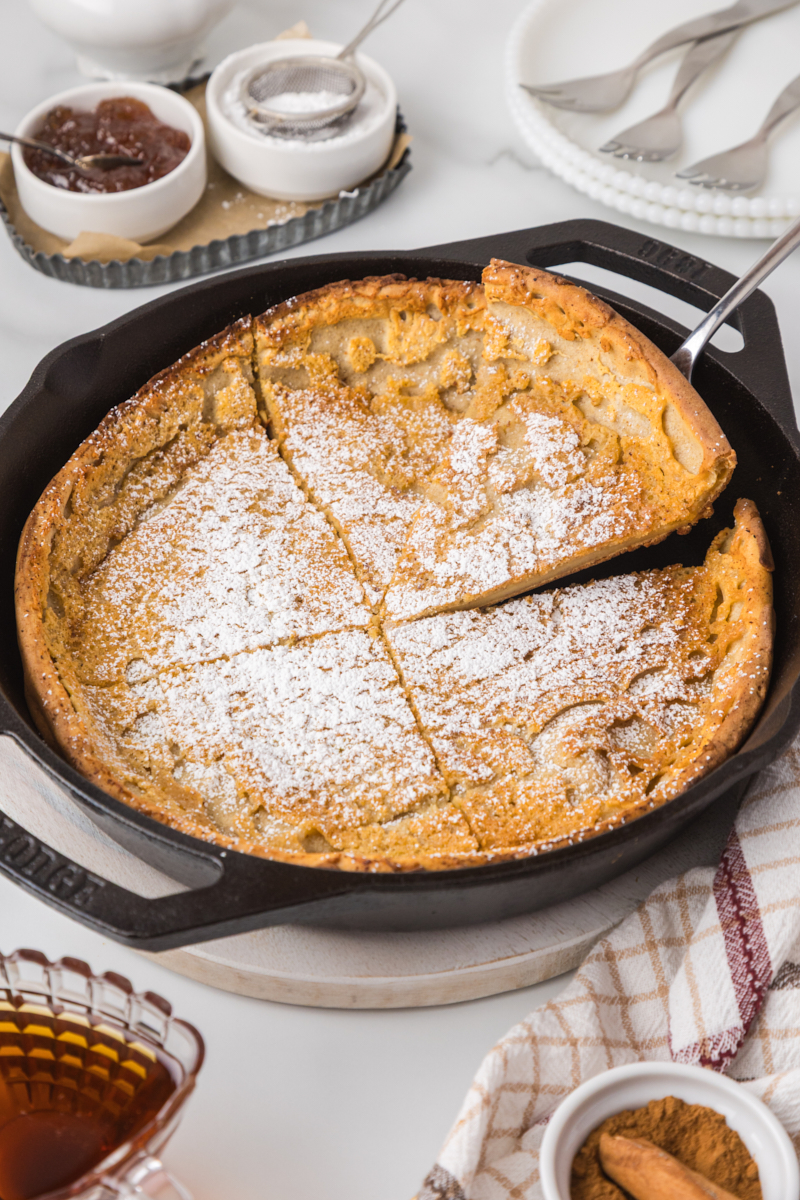
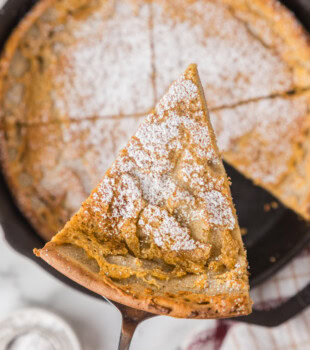
There’s something undeniably fun about a Dutch baby. The batter goes into a hot skillet looking completely ordinary… and about twenty minutes later it’s puffed, golden, and swooping up the sides like a popover. It’s one of the simplest breakfast treats I make, yet it never fails to impress.
This is the version I’ve been making for years. It’s light, lightly sweet, and wonderfully adaptable. A blender does most of the mixing, the oven does the rest, and you get a warm, cozy breakfast that feels special without requiring an early wake-up call.
Why You’ll Love This Dutch Baby Recipe
- Big results, tiny effort. A handful of ingredients and a blender are all you need.
- Beautifully puffed and golden. The hot skillet gives it that signature rise and crisp edge.
- Versatile enough for any season. Dress it up with powdered sugar, fruit preserves, fresh berries, or a drizzle of maple syrup.
- Perfect for sharing. It bakes in one skillet, making it great for brunch or a lazy weekend breakfast.
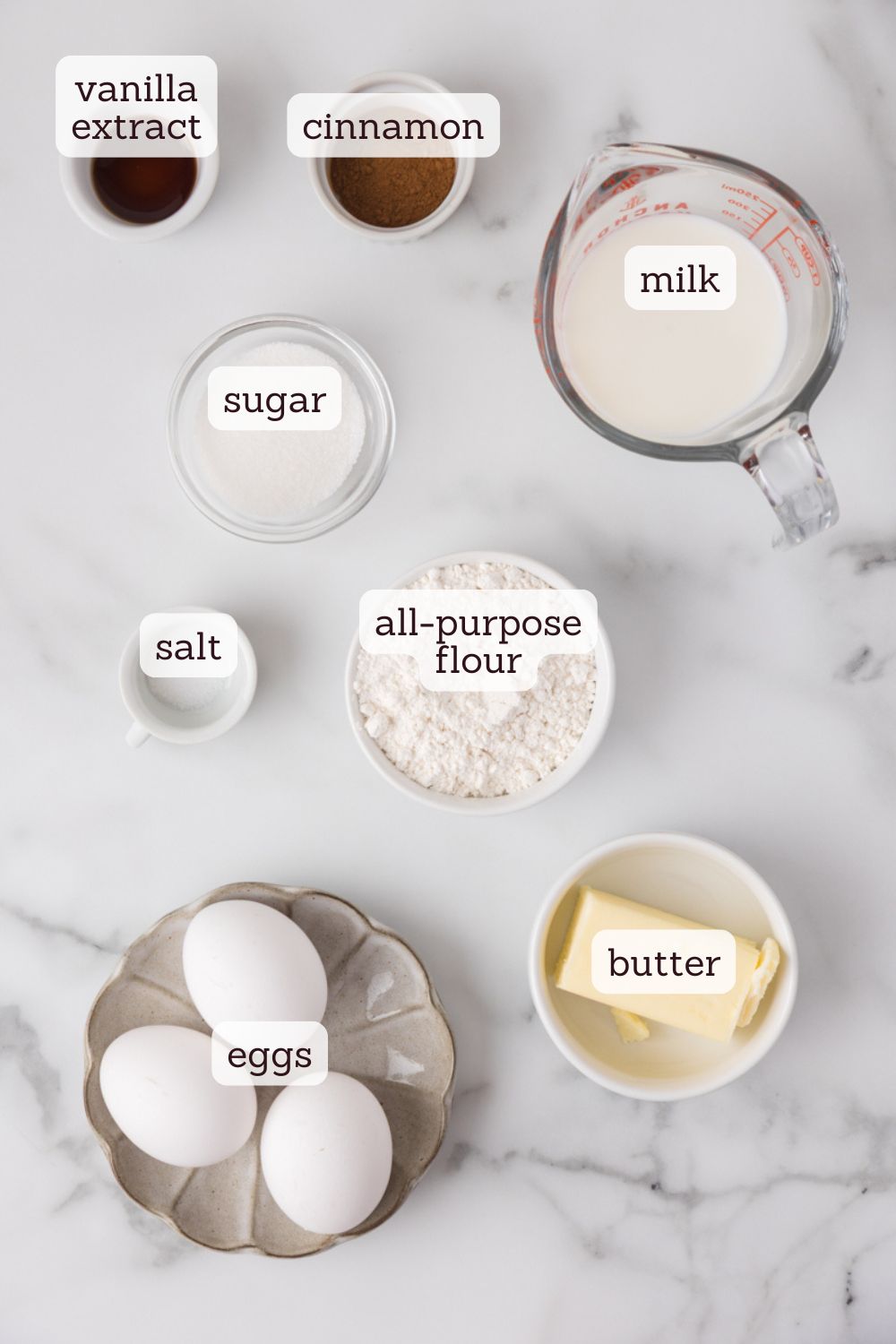
Key Ingredients
- Eggs – The backbone of the rise; they give the pancake its light, airy lift.
- Flour – Just enough to add structure without weighing things down.
- Milk – Keeps the batter fluid so it can flow up the sides of the pan as it puffs.
- Sugar + cinnamon – A touch of sweetness and warm flavor.
- Vanilla extract – Adds depth without overpowering.
- Butter – Melts in the hot skillet and helps the edges brown beautifully.
How to Make Dutch Baby Pancake
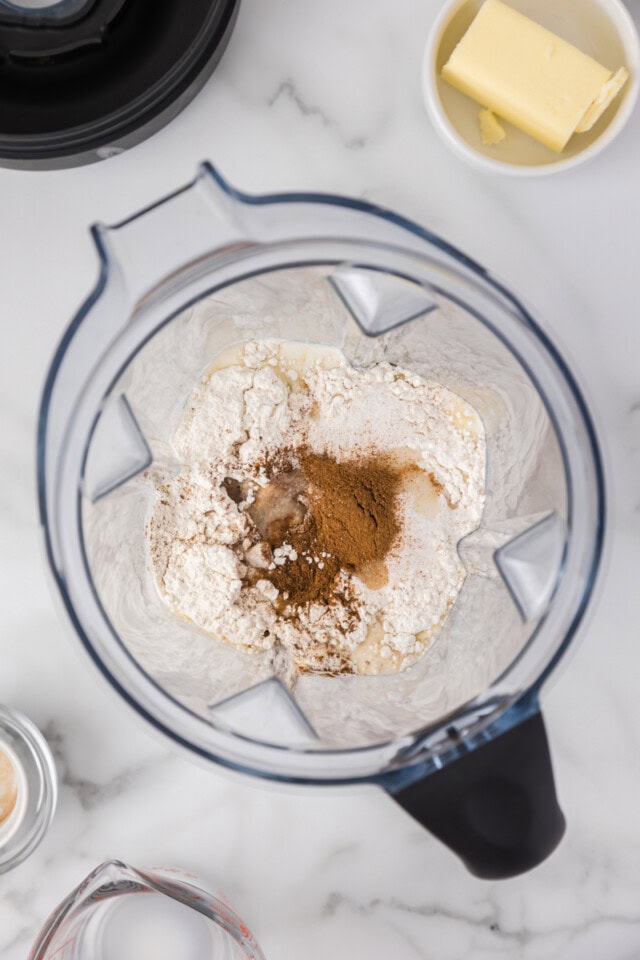
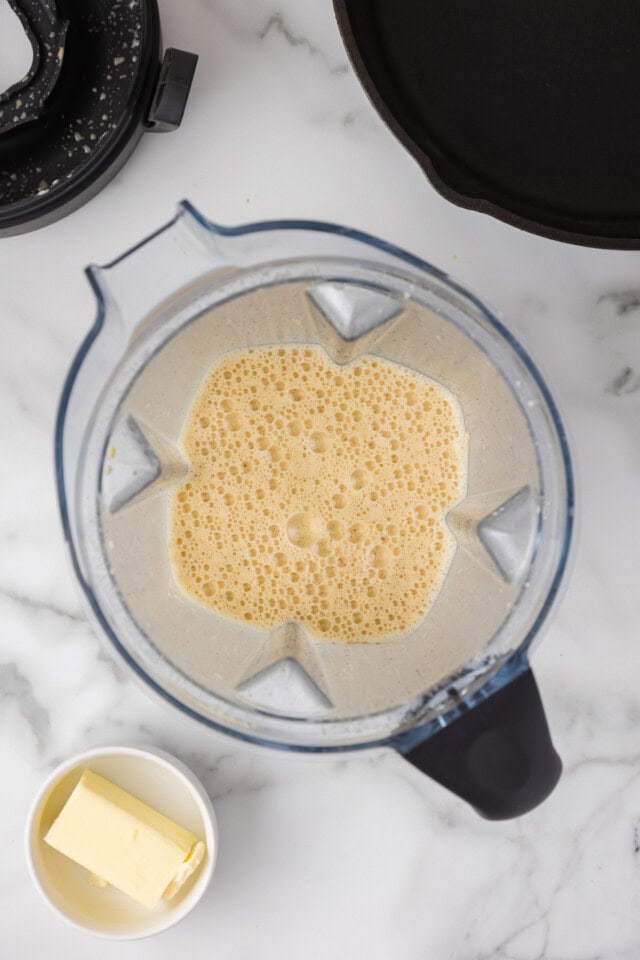
Blend the batter.
A blender or food processor makes quick work of combining everything until completely smooth. You can whisk by hand if needed; just be sure the batter is lump-free.
Heat the skillet.
Add the butter to a cast-iron skillet and melt it in the oven. This step matters: a hot pan helps the Dutch baby rise dramatically and keeps the edges crisp.
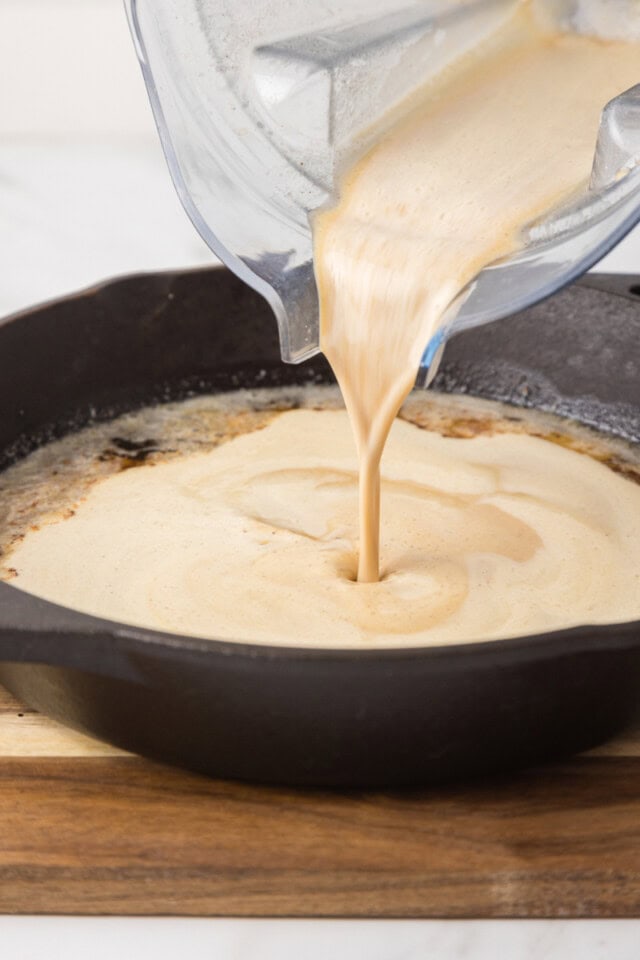
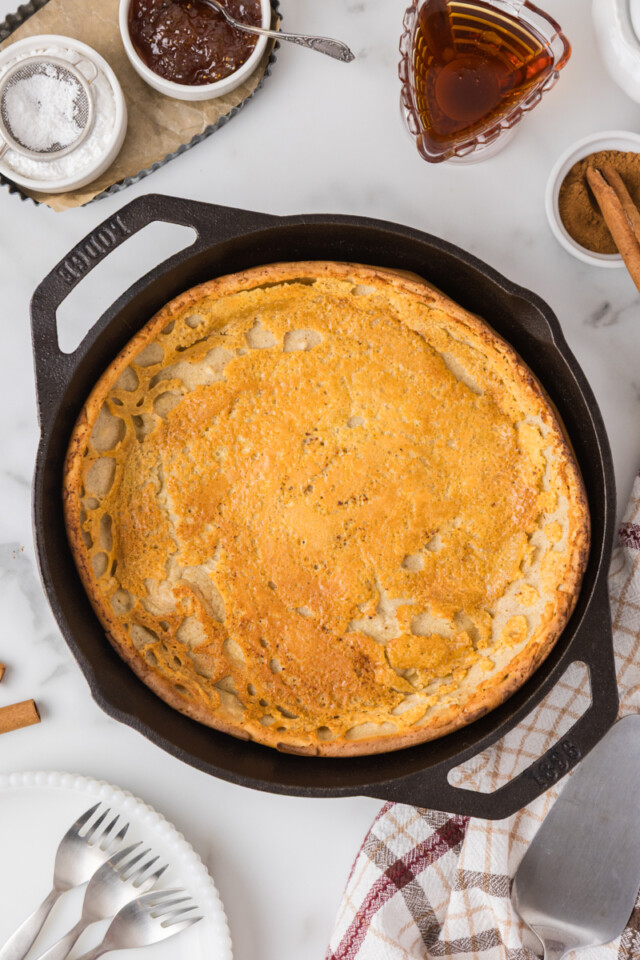
Pour and bake.
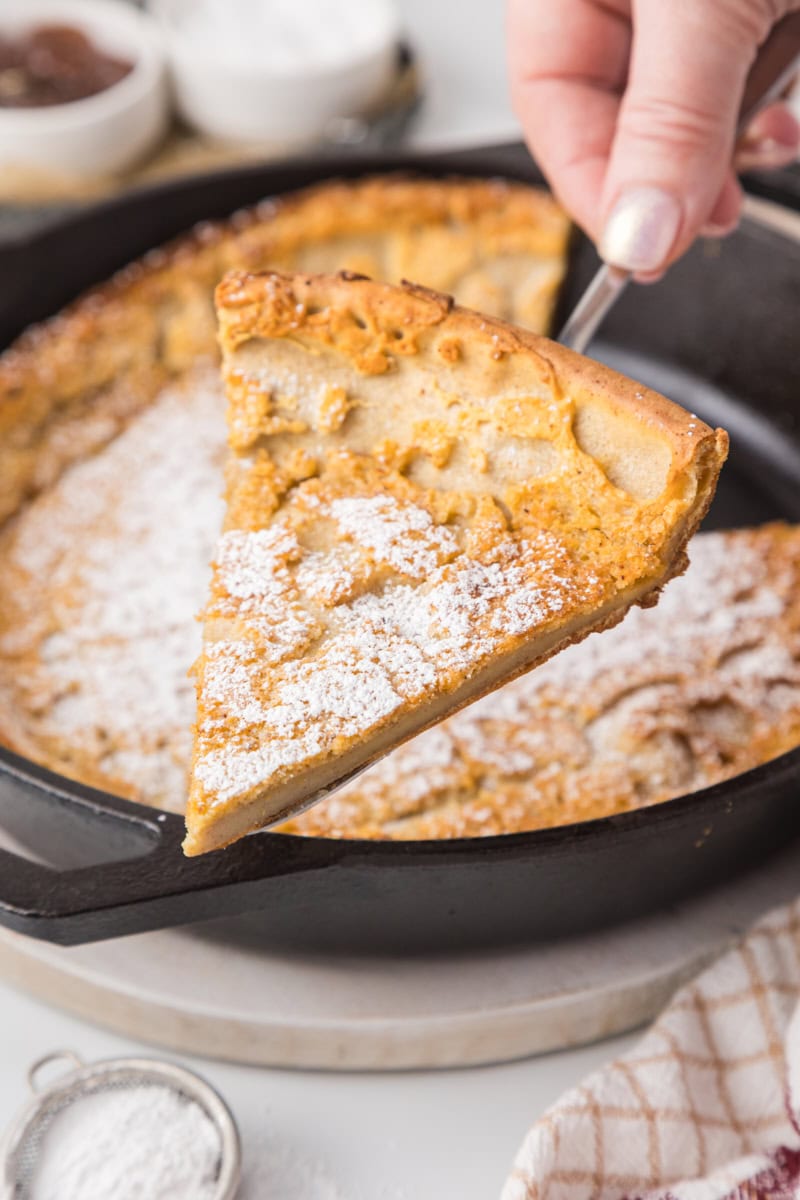
Once the butter has melted, pour in the batter and slide the pan back into the oven. Bake without opening the door so the heat stays high and stable. That’s what creates the big puff.
Finish at a lower temperature.
A brief bake at 300°F helps the center set and evens out the color without over-browning the top.
Serve immediately.
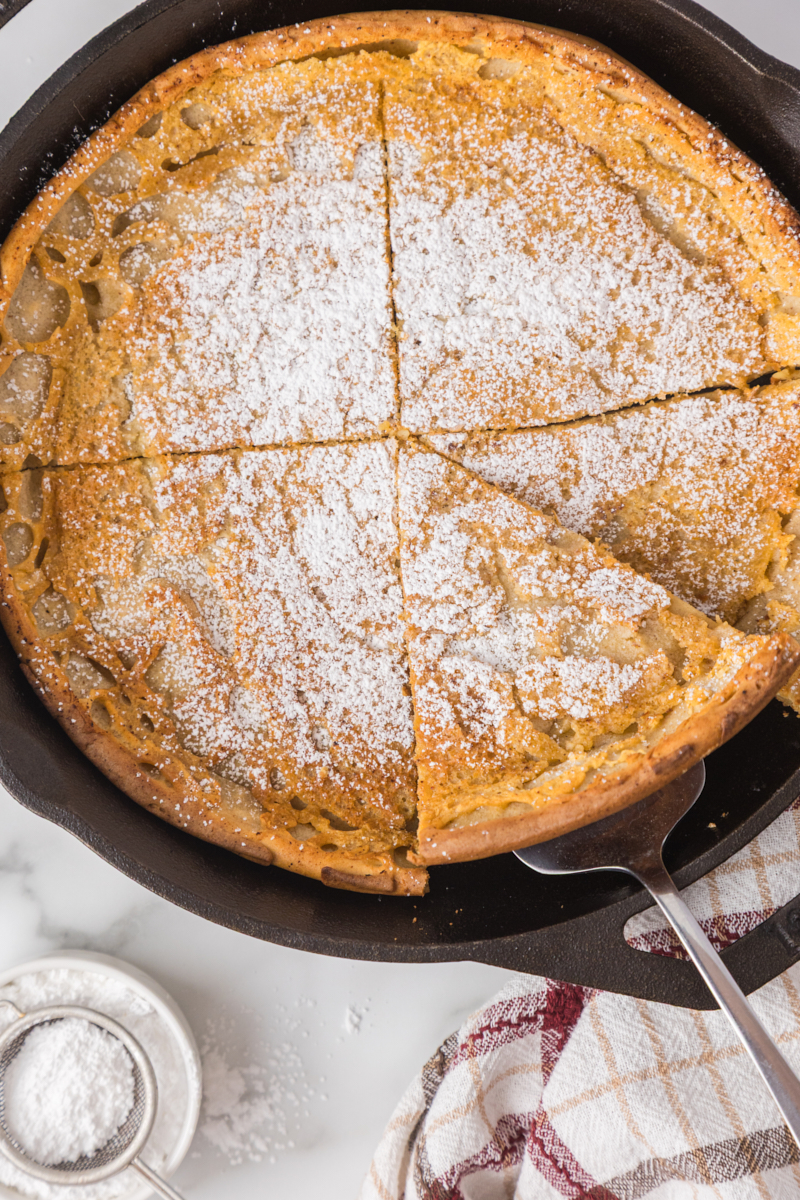
Dutch babies start to deflate as they cool, so bring it straight to the table and enjoy the moment.
Tips for Success
- Use a hot skillet for the best rise. The butter should be fully melted but not browned. If it’s sizzling aggressively or starting to darken, your pan may be a bit too hot. Pull it out right away.
- Blend the batter until completely smooth. A well-mixed batter creates even puffing and a lighter texture. Letting the batter rest while you melt the butter also helps any air bubbles settle.
- Don’t open the oven door during the first bake. A quick loss of heat can keep the Dutch baby from rising properly. Trust the process and peek through the oven window instead.
- Adjust for your oven’s personality. If your oven browns quickly from the top, place the skillet on a lower rack or reduce the initial temperature to 400°F. Every oven handles that first blast of heat a bit differently.
- Serve immediately. Dutch babies start to settle as they cool. Bring it straight to the table and let the puff be part of the show!
Troubleshooting Your Dutch Baby Pancake
The edges are too dark.
This usually means the oven runs hot from the top. Move the skillet to a lower rack or reduce the initial temperature slightly (try 400°F).
The center looks pale or less puffed.
Totally normal. The center doesn’t rise as high as the edges. If it seems underdone, keep it in the oven for the lower-temperature portion of the bake until it looks lightly golden and set.
The pancake deflated quickly.
Dutch babies always settle as they cool. If it collapses immediately, the oven door may have been opened early, or the batter may not have been fully blended.
The butter browned before the batter went in.
Your skillet is getting hot very quickly. Pull it from the oven as soon as the butter melts; there’s no need for it to sizzle.
Variations
- Add a citrus twist. Stir in a little lemon or orange zest for a brighter flavor.
- Make it extra cozy. Increase the cinnamon or add a pinch of nutmeg for a warm, spiced version.
- Go chocolatey. Whisk a tablespoon of cocoa powder into the batter for a subtle chocolate note.
- Try a berry bake. Scatter a handful of fresh berries into the batter right before it goes into the oven.
- Swap the extract. Almond extract or a blend of vanilla and almond adds a lovely bakery-style aroma.
Serving Ideas
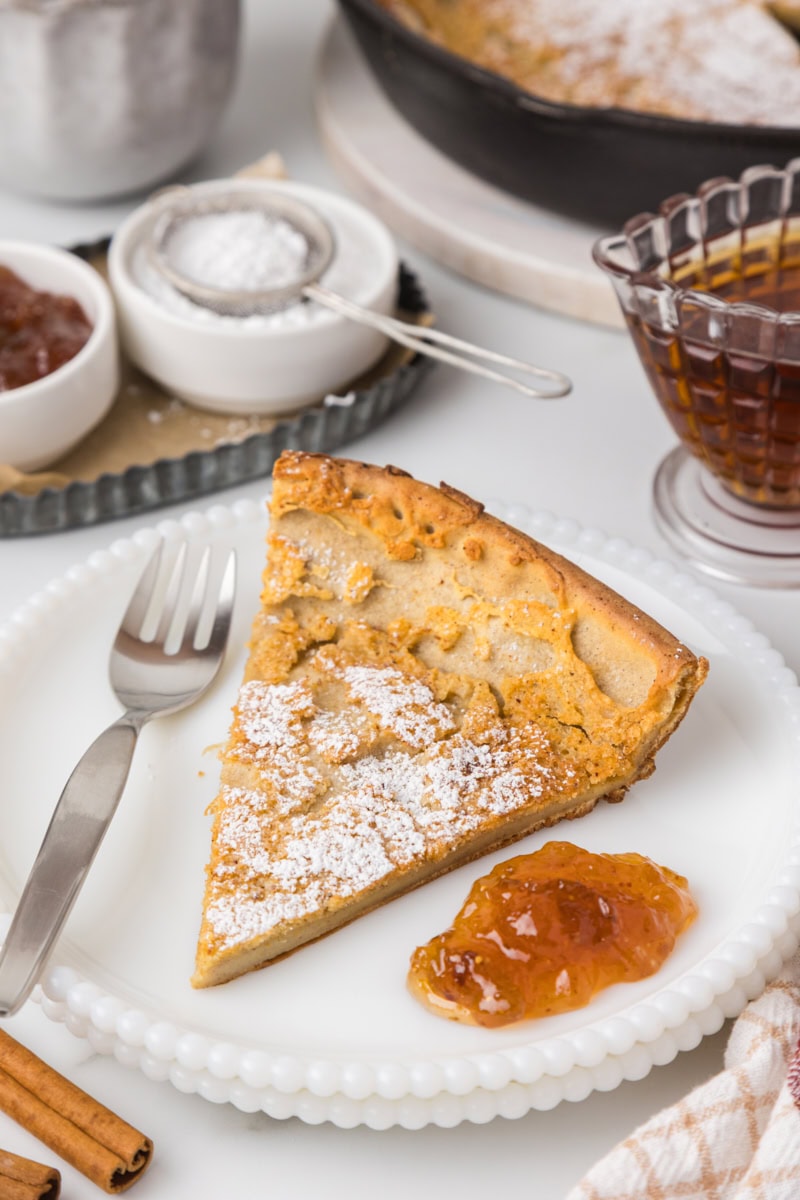
- A dusting of confectioners’ sugar – Classic, simple, and always pretty.
- Fresh fruit – Berries, sliced peaches, or whatever’s in season add freshness and color.
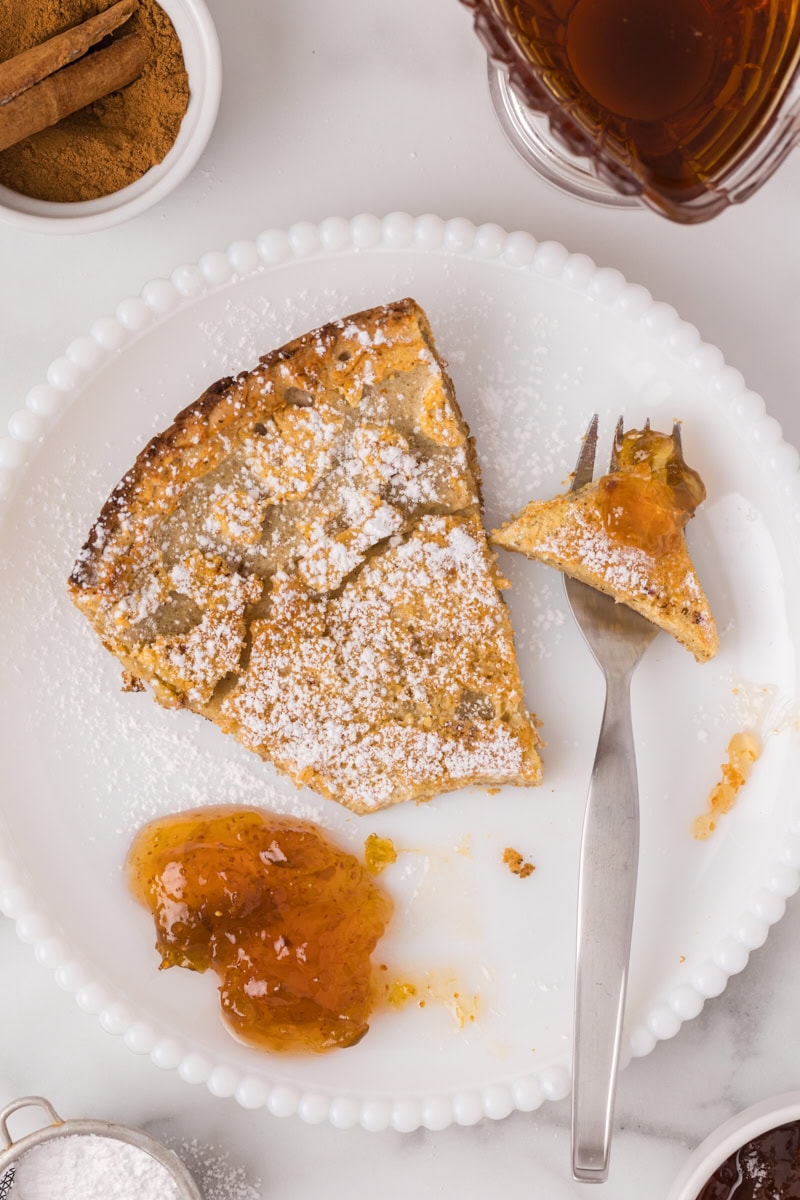
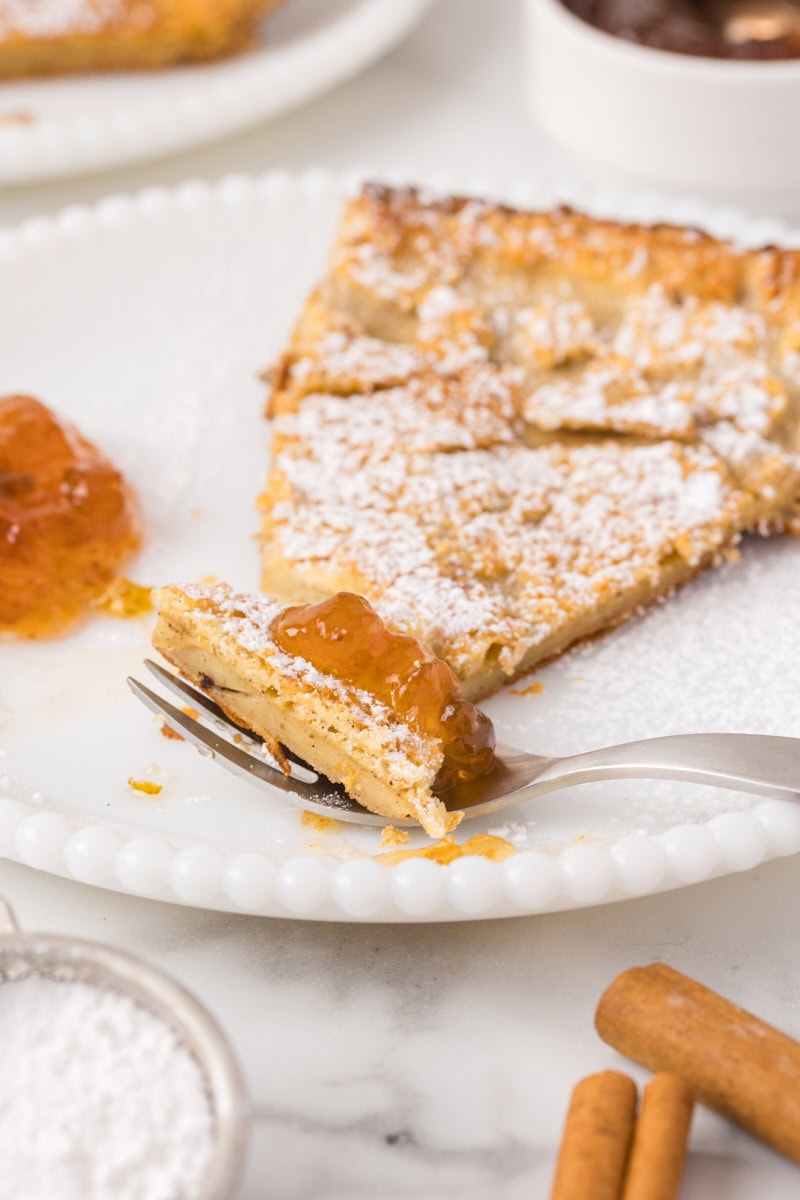
- Preserves or compote – Warm berry preserves, a fruit compote, apple butter, or a spoonful of citrus curd are all delicious.
- Maple syrup or honey – A light drizzle is all it needs.
- Whipped cream – For a brunchy, dessert-like version, add a scoop of softly whipped cream.
How to Store
Dutch babies are at their best right out of the oven, but leftovers can be stored in an airtight container in the refrigerator for up to 2 days. Rewarm in a low oven to revive some of the crispness.
A Simple, Showstopping Breakfast
A Dutch baby is one of those recipes that reminds me why I love baking: a few everyday ingredients turn into something beautiful and a little bit magical. Whether you’re making it for a quiet weekend morning or a cozy brunch, it’s the kind of breakfast that feels special without any fuss. I hope you enjoy it as much as I do.
More Breakfast Favorites
Dutch Baby Pancake
Ingredients
- 3 large eggs, at room temperature
- ½ cup (60 g) all-purpose flour
- ½ cup (120 ml) milk, at room temperature
- 2 tablespoons (25 g) granulated sugar
- ¼ to ½ teaspoon ground cinnamon, optional
- 1 teaspoon vanilla extract
- ¼ teaspoon salt
- 4 tablespoons (56 g) unsalted butter
- confectioners' sugar, preserves, or maple syrup, for serving
Recommended Products
Instructions
- Preheat oven to 425°F (220°C).
- Place the eggs, flour, milk, sugar, cinnamon, almond extract, and salt in the container of a blender or food processor. Blend until smooth. (See notes for directions for mixing by hand.)
- Place the butter in a 10-inch cast iron skillet, and place in the oven.
- As soon as the butter has melted, remove the pan from the oven. Pour the batter into the pan (do not stir), and return the pan to the oven.
- Bake for 18 to 20 minutes without opening the oven door. The pancake should be puffed and golden brown. (See notes for more detail.)
- Reduce the oven temperature to 300°F (150°C). Bake 5 to 8 minutes, or until browned.
- Serve warm with a sprinkling of confectioners’ sugar, preserves, or maple syrup
Video
Notes
- Pan choice: A 10-inch cast-iron skillet gives the best rise and browning. Other oven-safe skillets may bake a bit differently.
- Room-temperature ingredients: Cold eggs or milk can inhibit rise. If possible, let them warm slightly before mixing.
- Mixing by hand: A blender or food processor makes the smoothest batter, but whisking by hand works, too. Just make sure the flour is fully incorporated and the batter is lump-free.
- Butter timing: Remove the pan from the oven as soon as the butter melts. Overheating the butter can cause the edges to brown too quickly.
- Oven variation: If your oven runs hot or browns from the top, place the skillet on a lower rack or use 400°F instead of 425°F for the first bake.
- Bake time can vary: The first bake is typically around 18–20 minutes, but ovens differ. The Dutch baby is ready to move to the lower temperature when the edges are deeply puffed and golden and the center looks set around the edges but still slightly pale.
- No peeking: Don’t open the oven door during the first bake, as the quick loss of heat can keep the pancake from rising fully.
- Every Dutch baby is unique: The height and shape of the puff will vary based on the oven and pan. Uneven edges or slight deflation after baking are completely normal.
- Serving: Dutch babies are best enjoyed right away but can be reheated briefly in a low oven.
7 Comments on “Dutch Baby Pancake”
Can you use another type of flour besides a wheat flour. Thanks.
Hi, Connie. I’ve only made this with a wheat-based flour, so I can’t give you a definitive answer. I’d recommend checking the manufacturer’s substitution guidelines for the type of flour you’d like to use. If you try another type of flour, please let me know how it works.
I never made Dutch baby pancakes but this looks and sounds delicious!
I am gonna make this I have made a blueberry one and it was so delicious. I love these dutch-oven pancakes.
I’ve made this several times since it was posted and it is so tasty! I double it and bake it in a 9×13 Pyrex
I’m so glad you like it, Michelle!
I would cut down on the butter, four tablespoons is too much one will work. When I poured the batter in the butter rose to the top and prevented the dough from rising in the middle so it was flat.